

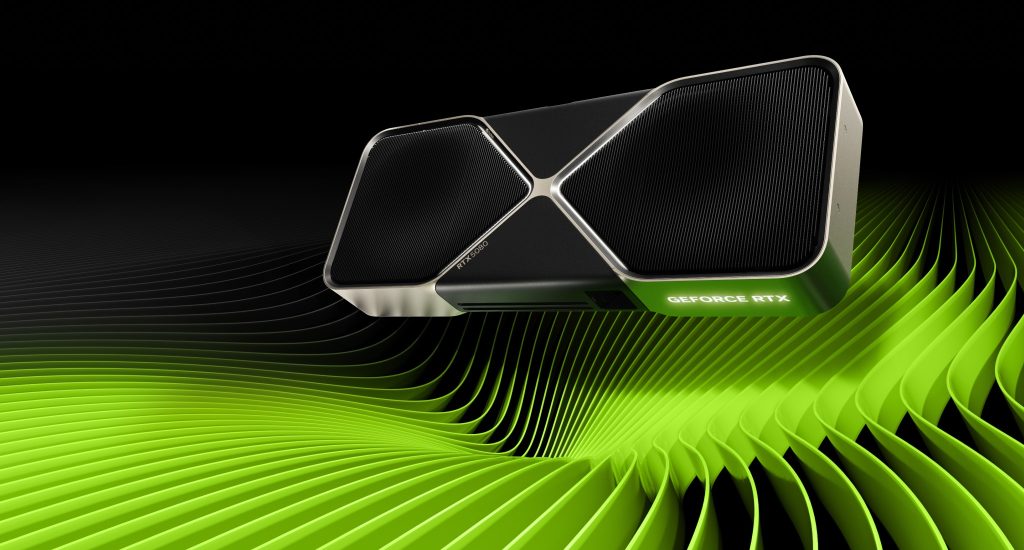
For anyone running models at home, the 24GB RTX 5080 was the card worth waiting for. Same chip as today’s 5080, 50% more memory, and that extra 8GB is the difference between “it fits” and “it spills into system RAM and crawls.” As of this week, it’s reportedly gone.
The official-sounding explanation is memory prices. I believe that’s part of it. I also think it’s worth asking a less comfortable question: when a company makes more than nine out of every ten dollars from data centers, does it want hobbyists running big models at home?
What happened
On November 10, the Chinese industry forum Board Channels reported that Nvidia told its board partners the planned January 2027 launch of the RTX 5080 24GB is off, with no new date. The stated reason: the 3GB GDDR7 chips the card needs reportedly cost about three times as much as the 2GB chips on every current RTX 50 card. Nvidia will keep building the standard 16GB RTX 5080 instead.
A few things worth being precise about:
- This is a report, not a press release. Nvidia never officially announced a 24GB RTX 5080, and it hasn’t commented on the cancellation. “They say it’s memory prices” really means “board partners say Nvidia told them it’s memory prices.”
- The card was a memory-only refresh. The RTX 5080 uses eight memory chips on a 256-bit bus. Swap each 2GB chip for a 3GB one and you get 24GB with no new GPU and no board redesign. That’s what makes the cancellation sting: the hardware side was the easy part.
- The latest reports describe it as aimed at the Chinese market first, where it was meant to become the new flagship. Earlier leaks pointed to a broader replacement for the 16GB 5080, possibly announced at CES.
- Pricing was never going to be friendly. Rumors put it around $2,000, roughly double the $999 launch price of the RTX 5080 Founders Edition.
This isn’t the first cut
The 24GB 5080 is the latest in a string of high-end GeForce cards that have quietly evaporated this year:
- The RTX 50 SUPER refresh (an 18GB 5070 Super and 24GB 5070 Ti Super and 5080 Super) was “delayed indefinitely” earlier in the year. The reason given then: the same shortage of 3GB GDDR7 chips.
- The RTX 5090 is reportedly being wound down, with its GB202 chips going to RTX Pro workstation cards. Nvidia has denied discontinuing it and blamed shortages on the memory and component crunch.
- The RTX 5080 and 5090 both vanished from Nvidia’s own US store at the end of October. Some retailers have had 16GB 5080s above $2,000.
So the consumer flagship is now a 16GB card that costs what a 32GB 5090 was supposed to.
The case for “it really is just memory prices”
I want to give this side a fair hearing, because it’s strong.
The memory shortage isn’t something Nvidia invented. AI data centers are swallowing DRAM. TrendForce expected PC DRAM contract prices to more than double in a single quarter at the start of 2026, the biggest quarterly jump on record. SK Hynix said its HBM, DRAM and NAND capacity was essentially sold out for 2026. Micron walked away from the consumer memory market entirely to focus on AI and enterprise customers. New fabs won’t meaningfully change the picture for years.
3GB GDDR7 is the scarcest, newest version of an already scarce thing. If a chip costs three times as much and the card was already rumored at $2,000, you can see how the math falls apart.
The case for “follow the money”
Now the devil’s advocate on the other side.
Look at where Nvidia makes its money. In its most recent quarter (Q2 of fiscal 2027), Nvidia reported $96.2 billion in revenue. Data center was $89.0 billion of that, over 92%. Gaming doesn’t even get its own line anymore; it was folded into an “Edge Computing” segment that brought in $7.2 billion. Every 3GB GDDR7 chip that goes into a $2,000 gaming card is a chip that could go into a workstation or server card that sells for several times as much.
Nvidia has a long history of keeping consumer cards out of AI work. None of this is new:
- Since 2017, the GeForce driver license has forbidden data center deployment. Same silicon, but if you want to run it in a rack, you’re supposed to buy the professional version.
- NVLink, the bridge that let you pool two cards together, was dropped from the consumer line with the RTX 40 series.
- Consumer VRAM has barely moved for AI purposes. The RTX 3090 had 24GB in 2020. The 4090 had 24GB in 2022. The 5090 got 32GB, and now it’s reportedly on its way out. Six years later, the most VRAM you can buy new in a “reasonably priced” GeForce card is still 16GB.
VRAM is the one spec that matters for local AI. Gamers can live with 16GB. Local LLMs can’t. A rough rule of thumb: at 4-bit quantization, 16GB comfortably runs models in the 12 to 14 billion parameter range, while 24GB opens up the 30-billion class (Qwen, Gemma, Mistral and friends) with room for real context. That’s the line between “fun toy” and “actually useful assistant.” A 24GB card at a consumer price is exactly the product that lets a homelab skip a monthly AI subscription.

Every 3GB chip in a gaming card is a 3GB chip that isn’t in a server card.
So is it a plot?
Here’s where I land, and I’ll push back on my own headline a bit.
I don’t think anyone at Nvidia sat in a room and said “kill the 24GB card so homelabbers have to pay for ChatGPT.” A few things argue against that version:
- Nvidia does sell high-memory local AI hardware. The DGX Spark has 128GB of unified memory and runs big models on a desk. The new RTX Spark Windows machines go up to 128GB too. Nvidia isn’t trying to stop you from running AI at home. It’s pricing it as a premium product. The 128GB DGX Spark launched in October 2025 at $3,999. It’s now $6,950, and the new 64GB version costs $4,999.
- Nvidia mostly sells to the cloud, not as the cloud. Whether you rent from OpenAI, Anthropic, AWS or Google, the hardware underneath is mostly Nvidia’s either way. It doesn’t need you to pay a specific cloud service; it needs the cloud to keep buying GPUs. A homelab card is a small sale either way.
- The cloud is getting more expensive too. The same memory crunch is pushing up the cost of building AI data centers. Renting isn’t immune.
But here’s the thing: a conspiracy isn’t required to get the same outcome. When memory is scarce, Nvidia allocates it to the highest bidder, and the highest bidder is always a data center. That isn’t a secret plan, it’s a priority list. The effect on you is identical: high-VRAM local compute becomes a luxury item, and renting becomes the default for everyone who can’t drop $5,000 to $7,000 on a box. Nvidia doesn’t have to want that. It just has no reason to fight it.
What a homelabber can actually do
If you’re trying to run models locally right now, some realistic options:
- Used RTX 3090s. Still the best VRAM-per-dollar on the Nvidia side. Two of them (48GB total) were going for roughly $2,000 to $2,600 this summer, less than a single 5090.
- AMD’s Strix Halo mini PCs (Ryzen AI Max+ 395) with 128GB of unified memory. Slower per token than a big discrete GPU, but they fit models no consumer card can. A 128GB unit from GMKtec was about $3,650 when Nvidia announced the 64GB DGX Spark, roughly half the price of the 128GB Spark.
- Two 16GB cards instead of one 24GB card. llama.cpp and vLLM can split a model across GPUs. It’s not elegant, but it works, and Proxmox will pass both through to one VM.
- Mixture-of-experts models. Newer MoE models only activate a fraction of their parameters per token, so they run usable speeds with part of the model in system RAM.
- Don’t buy a 16GB 5080 at $2,000 for AI. If gaming is the point, fine. If local LLMs are the point, that money buys more VRAM elsewhere.
My take
Memory prices are a real reason, not a cover story. But “real reason” and “convenient reason” aren’t mutually exclusive. Nvidia makes more than 92 cents of every dollar from data centers, it has spent years walling off consumer cards from serious AI work, and the one consumer product that would have given homelabs a cheap 24GB tier just got cancelled. Whether that’s strategy or simple triage, the direction is the same: own less, rent more.
What I’d watch for: if the 24GB card quietly reappears in the RTX Pro lineup at three times the price, that tells you everything. If it comes back as a GeForce card once memory prices ease, I’ll happily eat this post.
What do you think? Is this just supply and demand, or is the consumer AI card being phased out on purpose? I’d genuinely like to hear the counterarguments.
Watch
The local AI angle: what you can buy instead now that the 24GB card is gone (Fahd Mirza):
Why Nvidia killed the 5090, 5080 and the SUPER refresh, from the leaker who first reported the 24GB card (Moore’s Law Is Dead, from two weeks ago, before the cancellation):
Hardware Unboxed on the 5080 disappearing from shelves:
JayzTwoCents, not mincing words:
Sources
- Overclock3D: Nvidia reportedly cancels its RTX 5080 24GB over GDDR7 costs
- Wccftech: RTX 5080 24GB cancelled as 3GB GDDR7 is too expensive
- ShiftDelete: what changes for the 16GB 5080
- Tech4Gamers: China launch cancelled, 16GB stays in production
- PBX Science: not officially confirmed; pricing context
- TweakTown: RTX 50 SUPER delayed indefinitely
- TweakTown: RTX 5080 leaves Nvidia’s US store; retail above $2,000
- TweakTown: Nvidia denies 5090 cancellation, cites memory crunch
- Notebookcheck: RTX 5080 disappears from Nvidia’s store
- NVIDIA: Q2 fiscal 2027 financial results
- HotHardware: data center over 92% of revenue; gaming folded into Edge Computing
- Evertiq: TrendForce’s record DRAM price forecast
- Network World: SK Hynix sold out, Micron exits consumer memory
- GamesBeat: Deloitte on the memory crunch lasting to 2029-2030
- Implicator: DGX Spark 64GB at $4,999, 128GB now $6,950
- OpenClaw: used RTX 3090 vs RTX 5090 pricing (Aug 2026)
- NVIDIA: GeForce RTX 5080 product page (images)